Breakdown of the proposed Risk Mitigation Accounting model
Hedge accounting has always aimed to align the accounting view of the world with the economic one. The RMA proposal is the next step in this evolution, moving toward dynamic risk management. The IASB is proposing:
- A new accounting model (IFRS 9): The core of the proposal is a new accounting model within IFRS 9. It is designed to reflect the reality of how institutions manage interest rate risk on a net portfolio basis, a dynamic process that existing static hedge accounting models do not fully capture.
- Enhanced transparency and disclosures (IFRS 7): Significant update to IFRS 7, requiring a more comprehensive disclosure of dynamic risk management activities on the workfloor. Companies will need to clearly report their risk management strategy, Net Repricing Risk Exposure (NRRE), and how risk-mitigation activities affect the financial statements. This is designed to give investors a clearer understanding of a company’s risk management.
- Building blocks: The RMA model is built upon a documented risk management strategy that defines the organization's target profile. From there, banks identify their NRRE and establish a Risk Mitigation Objective (RMO). The model uses "benchmark derivatives" as a consistent tool to test whether the hedging aligns with the RMO.
- Continuous monitoring: The RMA model is not a one-time designation. It requires continuous monitoring to ensure the RMO does not exceed the NRRE. Changes in the underlying portfolio can create risk mitigation excesses, which must be identified and adjusted for in the profit and loss account.
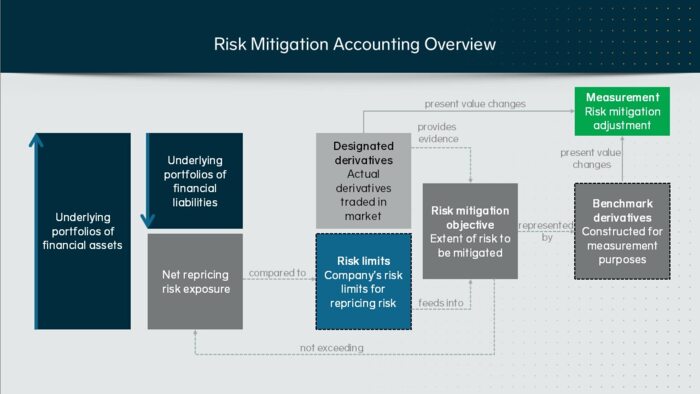
Scope of risk mitigation accounting, IASB’s Exposure Draft Snapshot
Bridging the gap: RMA impact on ALM, Treasury, and Accounting
A crucial, unstated goal of the RMA proposal is to create a direct bridge between the accounting operations, treasury, and the Asset-Liability Management (ALM) function. While hedge accounting has traditionally been the domain of the treasury department, the strategic, portfolio-wide nature of RMA elevates the role of ALM. The RMA model essentially adopts the ALM playbook. Concepts like Net Repricing Risk Exposure, and the use of time bands are standard practice for any ALM desk. By formalizing this approach, RMA ensures that the economic results of the ALM team's risk management activities are more faithfully represented in the financial statements.
For this to succeed, these three functions will require tighter integration than ever before. The strategic decisions from the ALM team and the execution from treasury will now become direct input to financial reporting, requiring a new level of collaboration and shared data.

 DE
DE  FR
FR 
