 DE
DE  FR
FR ESG Risks (Environmental, Social, Governance)
Pillar III Disclosure of ESG Risks.

Overview of ESG Frameworks

ESG reporting frameworks enable companies to disclose their sustainability and ethical performance. These frameworks provide a structured approach to evaluate ESG-related risks, opportunities, and impact. They promote transparency, accountability, and responsible business practices, covering factors like climate change, human rights, and diversity.
By using ESG frameworks, companies demonstrate their commitment to sustainable growth and provide stakeholders with a comprehensive view of their initiatives.
ESG reporting involves publicly disclosing progress, metrics, objectives, and milestones in environmental sustainability, social issues, and corporate governance.
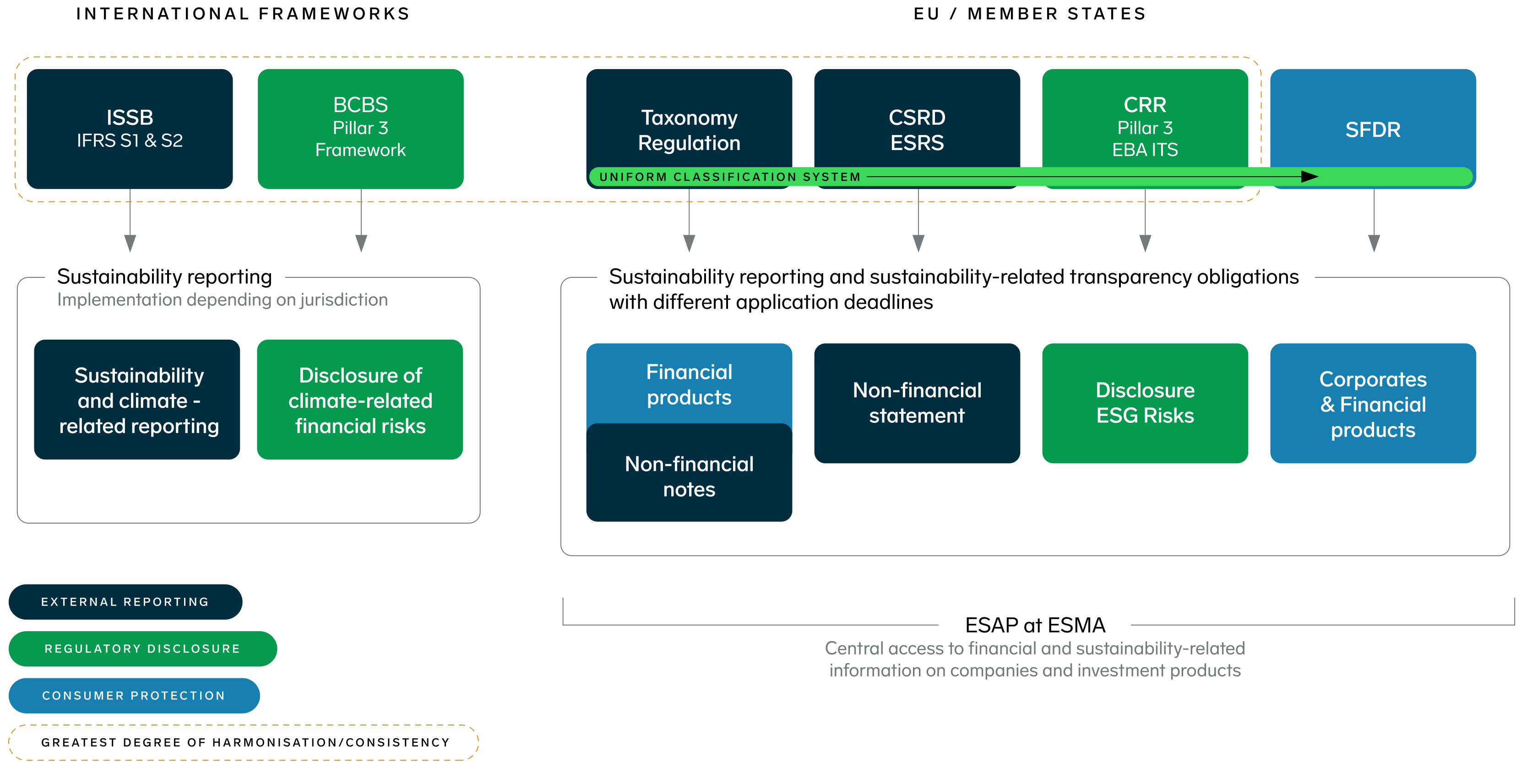
The EU has established four core frameworks for sustainable finance regulation.
These frameworks include:
The European Banking Authority (EBA) has significantly revised its Implementing Technical Standards (ITS) for Pillar 3 disclosures on ESG risks, establishing a more streamlined and proportionate framework set to apply from 31 December 2026. Key updates include extending the disclosure requirements to all EU credit institutions, not just large banks, based on their size and complexity. The new ITS simplifies the reporting process by removing duplicative templates, such as those for the Green Asset Ratio (GAR), to better align with other EU sustainability regulations.
On 12 October 2026, the EBA released the final technical package for Reporting Framework 4.4 Phase 1. This package includes the Data Point Model (DPM) and XBRL taxonomy needed to submit the updated Pillar 3 ESG disclosures to the Pillar 3 Data Hub. Institutions should prepare for a first Pillar 3 ESG disclosure reference date of 31 December 2026.
In addition, new ESG supervisory reporting, including the integration of stress-test data, is planned for Reporting Framework 4.4 Phase 2, with an expected first reference date of September 2027.
Explore ESG reporting in more detail:
Pillar III Disclosure of ESG Risks.
The EU taxonomy (Regulation (EU) 2020/852) is a crucial part of the EU's sustainable finance framework, serving as a market transparency tool.
Corporate Sustainability Reporting Directive.
Additional resources
On-demand webinar
In this webinar, we review progress on ESG standards and taxonomies, consider where and how they are being used, and discuss why now is the time for financial institutions to prepare for further change.
Learn moreSolution
Supporting your ESG reporting requirements through a powerful finance and risk regulatory data engine.
Discover
© 2026 Regnology Group GmbH All Rights Reserved

